
Learn
Rules That Hold When the Market Changes Its Mind
A simple notebook loop that helps you build trading rules around your real life and schedule, not around excitement or borrowed lists.

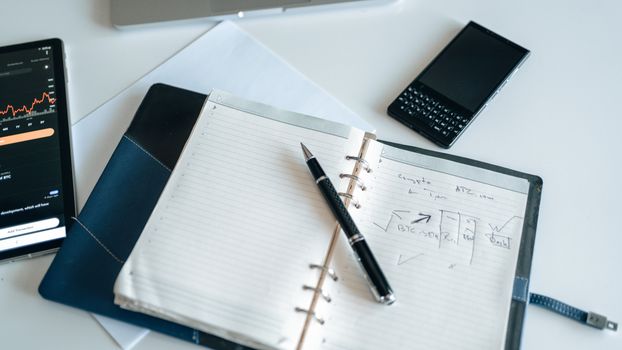
You close the laptop after a long day, open the charts at midnight, and something inside says take the trade. That voice empties accounts faster than bad analysis ever will. The answer is not more screen time. It is a short loop you repeat the same way whether the session feels boring or electric. Start with two pairs whose behavior you can actually study. Write down the exact hours they usually move with purpose instead of random noise. Protect that window. Everything else can wait. First ten minutes: mark the levels that mattered in the prior session. Watch what price does on the first touch. Note the time, the level, and whether it held. That is the entire job. After ten days the notebook begins to show you which reactions you actually understand and which ones you only hope will work. Risk goes into the rule on day one. Pick one percentage of your practice balance you will never break on a single idea. One percent is usually enough to keep your head clear. Write it down and treat it as fixed. Keep every session under forty minutes. Longer than that and attention starts drifting into the same rushed choices you are trying to leave behind. At the end of the week, compare Monday’s notes with Friday’s. The real shift shows up as fewer impulsive clicks and clearer reasons for staying out. When the market changes character and your notes stop making sense, change one small piece and test it for another two weeks. That slow adjustment is how rules stop being borrowed and start belonging to you. Most traders who keep the loop running for eight to twelve weeks notice the same quiet change: the urge to do something simply gets quieter because the notebook now tells them what actually matters.


Practice planner
Map a 12-month demo practice path
Adjust demo size and how often you study. This is a simple educational projection — not income advice or live trading results.
Hypothetical demo balance after 12 months
$1,719
Illustrative only. Demo results do not predict live trading outcomes.
Educational projection. Actual results vary — trading involves risk.
Frequently asked questions
How do I know the notebook is actually changing my trading?
My shifts at work change every week. Can I still build anything useful?
Should the risk percentage stay fixed even when a setup looks unusually clean?
How long until I can trust my own notes enough to try small size live?
Is feeling bored during practice a bad sign?
Educational disclaimer
This article is for educational purposes only. It is not financial, investment, or trading advice. Trading forex and other leveraged products carries significant risk. Past performance does not predict future results. Consult a qualified advisor before trading live.
About SniperHouse — Educational trading content from practitioners who focus on risk management, market structure, and building a repeatable learning routine.
Last updated .